


31 Oct How the Lack of Global Sustainability Standards Created a Fear of Getting It Wrong
Sustainability was never meant to be perfect. Brands that are scared to report real progress inhibit clarity and action
Sustainability has no single rulebook. What is considered responsible in one industry, market, or culture can look completely different in another. Yet brands continue to chase the illusion of universal perfection, a flawless image that cannot be questioned. The problem is that this ideal does not exist. Pretending it does, slows real progress and undermines credibility.
I was reminded of this while leading a talk at Birmingham City University on authentic brand messaging. During the session, we explored a simple but powerful question: How can brands remain believable in an age of scepticism? The discussion highlighted why so many sustainability strategies fall short and what brands can do differently to build credibility and meaningful impact.
As it turns out, most brands are not fully believable. Credibility is not about what a company says. It is about whether what they say aligns with what they actually do. The story presented to the public often differs from internal realities, and even minor mismatches erode trust. Audiences can sense when a brand’s promises are too polished or when communication outpaces action. Authenticity is not a slogan. It is an ecosystem built from aligned behaviours, structures, and culture.
The Problem: Confusion, Not Failure
Sustainability means different things in different contexts. There is no universal standard for what qualifies as sustainable. One company may define it by carbon reduction, another by ethical sourcing, and yet another by circular design. All approaches are valid within their context, but without a shared framework, the conversation becomes confusing.
Brands that ignore this reality often fall into greenwashing traps or set unattainable expectations. Vague messaging and glossy visuals may create the appearance of responsibility, but they rarely reflect the full picture. Honesty about limitations and incremental progress builds trust, encourages learning, and creates room for meaningful improvement. Trying to appear flawless often has the opposite effect, making brands sound generic and untrustworthy.
Authenticity Is Credibility in Action
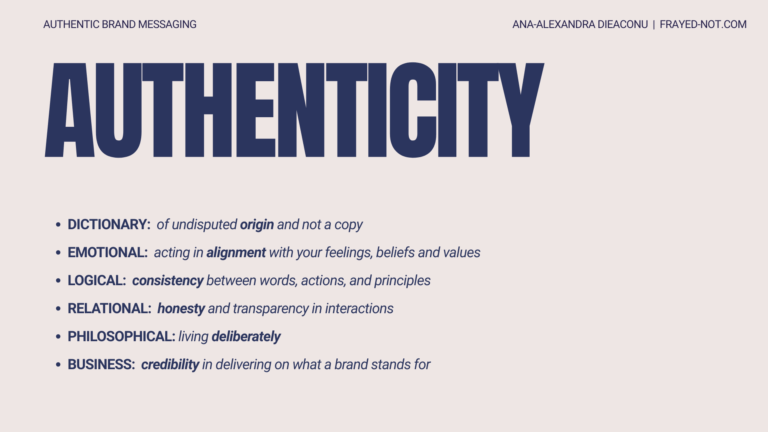
One of the key points from the Birmingham City University session was that authenticity in business is about credibility, not image. Early-stage brands often begin with a clear purpose, a founder identifying a problem and seeking to solve it. Passion drives early action. But as the company grows, structure changes. Marketing teams focus on storytelling, sustainability teams handle data, and leadership prioritises growth. The single, authentic voice fragments into competing interests.
Culture shifts and clarity fades. The sustainability message can drift from reality. Sometimes this happens because of simplification for public communication. Other times it is pressure to appear responsible. Either way, when storytelling outpaces delivery, credibility collapses. The lesson is that authenticity must be embedded in the culture, systems, and behaviours of the organisation, not added as a tagline.
The Moving Target of Sustainability
Sustainability is not fixed. It varies across industries, geographies, and timeframes. A textile brand’s supply chain practices will differ from those of an energy company. Ethical standards and regulatory requirements vary by market. One country may measure sustainability through carbon reduction, another through social impact, another through waste management or biodiversity.
When a brand claims to be sustainable, it usually means it is trying to improve. That is not failure; it is the reality of working within complex systems. Yet many brands prefer to mask this nuance behind bold statements or perfect visuals. Ironically, this quest for perfection makes them sound less credible, not more.
The right approach is to acknowledge where the company sits on the sustainability spectrum, report progress transparently, and set measurable, achievable goals. Brands that embrace this honesty gain trust and create space for genuine innovation.
Why Brands Fear Standing Out
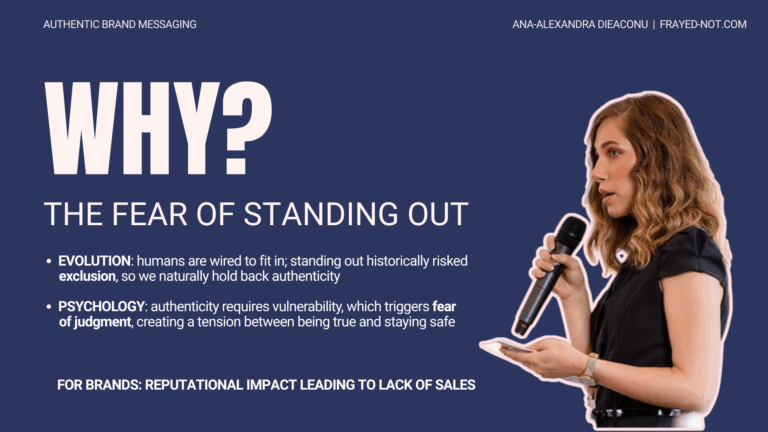
Brands do not fear failure as much as they fear standing out. Humans are wired to seek belonging. Evolutionary instincts make risk synonymous with exclusion. Within brand teams, this translates to caution. Staff ask themselves what will happen if a campaign offends someone, if customers reject a new initiative, or if sales decline.
The result is imitation. Brands copy each other, smoothing out distinctive edges until sustainability messages blur together. When everyone tries to appear perfect, no one stands out, and credibility diminishes. Real authenticity requires stepping away from conformity and communicating honestly about values, challenges, and progress.
The Fear of Imperfection
Consumers reinforce this fear of imperfection. Audiences expect brands to be morally flawless while delivering affordable, convenient products. Sustainability inherently involves trade-offs between impact, cost, and feasibility. No brand can achieve every goal at once.
Brands that admit limitations, explain trade-offs, and show incremental progress earn far more trust than those that attempt to present a perfect image. Credibility is not perfection. It is demonstrated by transparent action, measurable results, and a willingness to evolve.
Culture, Alignment, and Systems Thinking
Internal culture and alignment are crucial. Growth changes teams and priorities, and messages that once felt unified may no longer reflect reality. Leadership that does not clarify vision can create conflicting incentives, leaving sustainability teams, marketing, and operations pulling in different directions.
The solution lies in systems thinking and cross-functional collaboration. Designers, data analysts, behavioural scientists, and sustainability leads must collaborate to align goals and strategies. When every function understands its contribution to sustainability, authenticity becomes embedded rather than forced.
From Green Talk to Practical Action
Sustainability will not be solved by messaging alone. Brands must integrate responsible practices into operations. This includes embedding sustainability into product design, supply chains, and customer interactions. Circularity, regenerative approaches, and data-driven insights are essential.
AI and behavioural insights can support smarter choices, reduce waste, and predict supply chain risks. Technology amplifies impact when paired with intentional leadership. Leaders must understand tools, create budgets for innovation, and evaluate initiatives for both social and environmental benefits.
Sustainability must be operational, not performative.
The Consumer Connection
Consumers have influence. Every purchase reflects values and shapes demand. Small, informed decisions can shift supply chains and reinforce responsible practices.
Brands can empower consumers by providing transparency, clarity, and proof of impact. Consumers, in turn, can act intentionally: examining ownership, scrutinising supply chains, and supporting brands that demonstrate measurable progress. When both sides participate, the ecosystem strengthens.
The Frayed Not Approach
At Frayed Not, we help brands move from intention to implementation. Our approach combines behavioural science, systems thinking, and practical delivery to embed sustainability in culture, operations, and customer experience.
Key focus areas include:
- Cross-functional collaboration: integrating data, design, and operations for sustainable innovation
- Behavioural insights: leveraging human behaviour to improve adoption and reduce waste
- Leadership support: helping executives understand risk, opportunity, and societal impact
- Impact-focused metrics: shifting KPIs from volume to environmental, social, and governance outcomes
Sustainability is not a badge to display. It is a practice, a mindset, and a commitment to continuous improvement.
Next Steps for Brands
- Assess your current sustainability position and acknowledge limitations
- Embed sustainability into product design, sourcing, and operations
- Create cross-functional teams to align messaging, strategy, and execution
- Apply behavioural science to influence both employees and consumers positively
- Measure progress using transparent, verifiable metrics
- Educate leadership to understand the impact of choices and emerging technologies
Sustainability was never meant to be polished. It is inherently messy, context-dependent, and evolving. Brands that embrace honesty, alignment, and measurable action will not only survive scrutiny but also lead the market toward meaningful progress.
The only thing universal about sustainability is confusion. Stop pretending to be perfect and start acting in ways that are credible, tangible, and future-ready.

Sorry, the comment form is closed at this time.